onePOI.online "Silicon Courthouse"
The Infrastructure for the Governed Phygital Economy
Already Exists. onePOI.online is the Architecture to "Viably" Enable It.
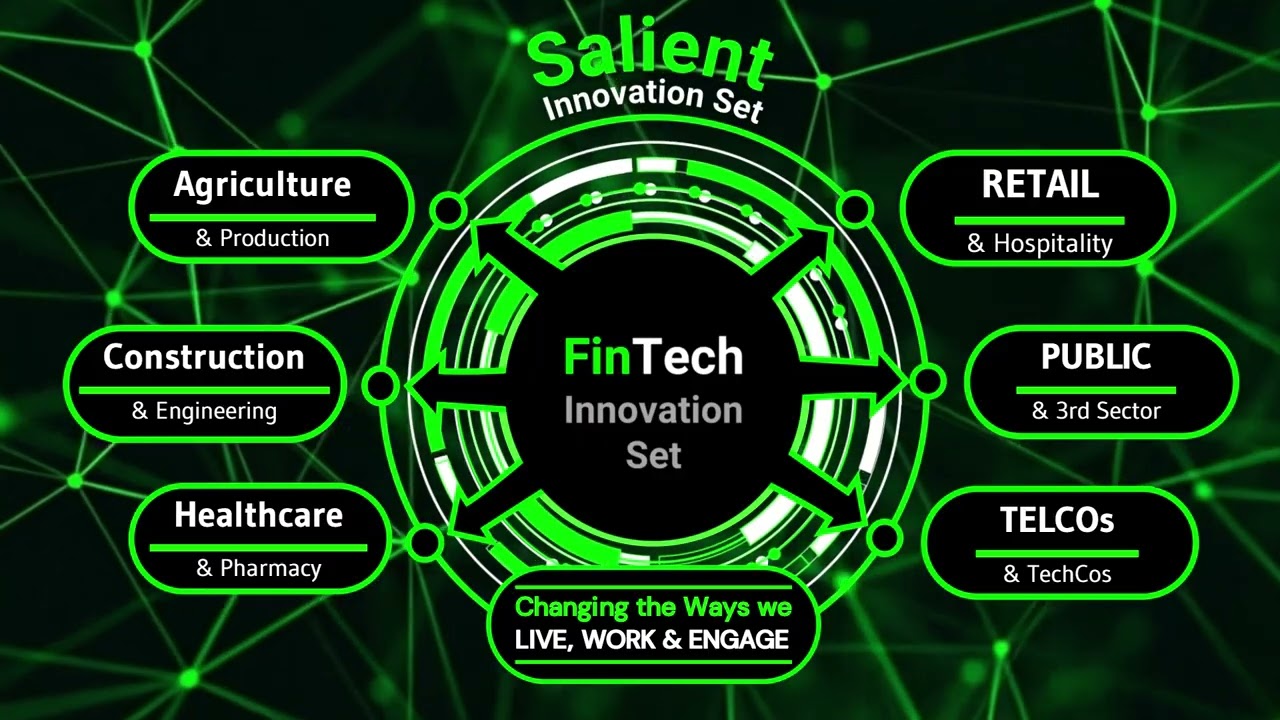
Across sovereign jurisdictions, a convergence of regulation, technology, and institutional trust is creating a once-in-a-generation opportunity. The phygital revolution is not coming – it is already encoded in law. Salient Innovation Set is building the architecture to make it real.
Pre-Launch Governance Disclosure: The Constitutional OS is a 100% completed, highly detailed Blueprint Specification mapped down to component and service levels (SABSA security architecture & BIAN v14 domain models). Physical deployment and hardware rollouts are intentionally deferred until the First Official Tenant Cohort formalises phase requirements. All performance figures and operational metrics represent target-state architecture on a near-term roadmap (target Q4 2026 / 2027), parameterised and deployed exclusively by Tenant Cohorts in play.
Engineered for Institutional Margins.
Adopted for Human Sovereignty.
Every capability across the Salient Innovation Set delivers an immediate, symmetrical return: radical margin recovery for the enterprise tenant, paired with frictionless dignity and absolute cryptographic safety for the citizen.
How the Tenant Expands Margins
Transforming operating models from defensive cost centres into agile, shared revenue engines through multi-tenant pooling and mathematical compliance.
-

CapEx Pooling & No Single-Tenant Hardware
POI Appliances run white-label on co-funded premises. Reach 50 commercial catchments without funding 50 proprietary branch builds.
-

Zero Interchange & Flat-Fee Clearing
Instant Account-to-Account rails (SEPA Instant / PayShap) bypass 1.5–3.5% card scheme tolls with predictable, flat sub-cent clearing fees.
-

Compliance by Construction
Agreement DAGs enforce statutory mandates at wire speed; non-compliant states cannot execute, eliminating retrospective audit penalties.
-
Accelerated Partner Onboarding
Pre-verified BIAN and ArchiMate capability components compress multi-firm integration cycles from quarters to days.
Why the Customer Loves Using It
Delivering sovereign dignity and verifiable security where users never surrender control over their identity, consent, or funds.
-

Nothing Stored to Steal
Credentials remain in the user's oneWallet. A breach of a merchant's server reveals zero identity records, protecting citizens completely.
-

One Pattern, Everywhere
The same intuitive tap-and-confirm interaction works seamlessly at a high-street kiosk, transit hub, EV charger, or smartphone.
-

Delegated Authority, Never Escalated
Autonomous AI agents carry single-use, bounded warrants; an agent checking information cannot escalate its authority to transfer money.
-

Payments That Do Not Fail
When a payment network degrades, the transaction reroutes with authentication preserved – zero declines, zero repeated entries.
The Governance Gap
Today's digital commerce infrastructure was built for a world that no longer exists. Siloed systems. Fragmented identity. Unverifiable consent. Legacy pooling models that force impossible tradeoffs between scale and customer sovereignty.
As AI agents begin to transact, negotiate, and govern on behalf of people and organisations, the gap between what is legal, what is ethical, and what is technically possible grows wider. The cost of this gap is not theoretical – it is measured in failed trust, excluded citizens, and regulatory exposure.
Legacy first-generation Banking HUBs and ATM pooling models are not the answer. They deliver customer disconnect, zero brand agility, and no path to agentic service delivery. The architecture of the past cannot carry the weight of what comes next.
Fragmented Identity
KYC/KYB/KYP silos with no interoperability across sectors or borders
Unverifiable Consent
No lawful audit trail for agentic acts across wet-ink, digital, and voice channels
Zero Agentic Governance
AI agents acting without constitutional constraints or explainable authority
Exclusion by Design
Digital commerce that leaves the vulnerable, rural, and underserved behind
Sovereign Value Across Three Domains
Dramatically accelerate integration and launch cycles with built-in regulatory compliance frameworks. By replacing manual paperwork checks with instant cryptographic validation, you reduce compliance headcount and eliminate audit delays. The system delivers forensic, fully attributable evidence trails that are impossible to hide.
Ensure dignified, secure access to financial and public services across physical and digital spaces. Your identity data is protected by strict privacy enclaves, keeping your information secure while ensuring accessibility at kiosks, ATMs, or mobile wallets without needing advanced technical skills.
Enforce a hard mathematical leash on edge-bound AI systems executing transactions under explicit user consent. Downstream AI agents are structurally subordinated to hardware root-of-trust rules and constitutional constraints, preventing unauthorised actions or policy violations.
A flat 0.10 euro target clearing fee in place of a 2–3% card interchange toll. On a high-volume merchant book that single line is the largest commercial movement in the architecture.
Shared capital expenditure. Competing banks, retailers, healthcare providers and civic authorities run on the same physical appliance under hardware-enforced isolation, so nobody funds a single-tenant estate.
Compliance sold on rather than paid for. An anchor institution holding this capability can white-label proof-of-compliance and governance services to smaller banks, payment firms and merchants that cannot build it – turning a cost centre into a revenue line.
Evidence produced as a by-product. Under PSD3 and the UK reimbursement rules, the firm that cannot prove it acted correctly pays. Here the proof is generated by every decision automatically, so reimbursement claims and remediation programmes do not arise.
Nothing to breach. The wallet proves a fact – cleared to pay, old enough, authorised to act – without handing over the data behind it. There is no central store of personal information to be stolen, because the architecture never assembles one.
One way of doing things, everywhere. Kiosk, charger, counter, checkout, phone. One way to prove who you are, one way to approve a payment, nothing new to learn per venue.
Approval that cannot be talked out of you. Authorisation is cryptographic, not conversational. A scam call cannot produce an approval that was never given, and an agent cannot spend past the limit its owner set, because the authority is not there to abuse.
It still works when the network does not. Adjudication runs locally on the appliance, so essential services keep functioning through power cuts and outages.
Three Roles. One Platform. Your Path In.
You hold regulated trust. You operate estate infrastructure. You want to lead a governed multi-tenant cohort – owning the Constitutional OS and commissioning services from deployers and tenants across your sector.
You build products. You want to deploy on governed infrastructure – accessing the Constitutional Development Environment, SAST/DAST pipelines, and Agreement DAG authoring tools – without building a compliance machine from scratch.
You serve customers. You want to join a governed cohort – accessing shared infrastructure, identity rails, and phygital POI services through an Anchor without building your own compliance or technology layer.
How the Three Lists on This Site Fit Together
What the platform commits to. The values a tenant is buying into.
The constitutional rules those principles compile down to. Non-negotiable, machine-enforced, and set out in full on the Constitutional OS page.
What the architecture does that nothing else does, ranked strictly by how foundational each one is to the layer above it.
Seven Ranked Foundational Innovations
Ranked strictly by how foundational they are to the sovereign ecosystem – where every capability is a direct mathematical consequence of the layer beneath it.
Authority Lives in the Agreement
Authority lives in the agreement, not in the identity. Every other system treats “who you are” as carrying permission. onePOI treats the agreement as the only source of authority: a role must have been granted, an agreement must authorise that role, the agreement itself decides the case, and a record must prove it happened that way.
Tenant: Compliance leaves the transaction path – authority check is the transaction.
Customer: Nobody acts on you without an agreement mandate you can see.
Unlawful Execution is Unavailable
Unlawful execution is a state the platform cannot enter. Not detected late, not remediated – unavailable. The commercial word is insurable. Autonomy you cannot underwrite is just expensive liability. Pre-execution adjudication by construction creates the bounded-loss conditions underwriters require.
Tenant: High-stakes agentic workflows become formally underwriteable.
Customer: Your rights cannot be breached by model hallucination or runtime glitch.
Constitutional Delegation & Agent Liability
AI agents carry signed On-Behalf-Of (OBO) delegation tokens minted by legal principals, with single-action expiry and pre-ruling GateKeeper verification. If an agent exceeds its constitutional envelope, execution halts before state transition occurs.
Tenant: Full legal attribution and zero ambient privilege exposure.
Customer: Autonomous agents can never exceed their explicit delegated mandate.
Lawful Execution at the Counter
Pre-execution adjudication runs locally on the POI appliance hardware at the physical edge. The platform settles and validates transactions during power cuts and network partitions without cloud backhaul, ensuring public-interest civic resilience.
Tenant: Unbroken business continuity at the physical point of interaction.
Customer: Essential civic and retail services function reliably in blackouts.
Many Tenants, One Appliance
Multiple competing banks, retailers, healthcare providers, and civic authorities operate on shared POI hardware. Hardware-isolated TEE enclaves and membrane boundaries eliminate data co-mingling and slash capital expenditure.
Tenant: Shared capex with sovereign cryptographic isolation.
Customer: Single physical touchpoint for all essential community services.
Flat Clearing & Sovereign Wallet
Because the platform is captive to no single card scheme, volume moves to the cheapest lawful path and a flat clearing fee displaces a percentage toll. The saving is structural, not a negotiated rate that erodes at renewal. Near-term target state architecture, Q4 2026 to 2027 roadmap. oneWallet acts as the sovereign root of authority, projecting verifiable micro-claims.
Tenant: A flat 0.10 euro target clearing fee replaces 2–3% card interchange tolls; zero toxic credential liability.
Customer: Instant settlement with complete cryptographic data sovereignty.
Replay as a Product, Not a Log
Re-run any decision exactly as it was made, against the precise version of the rule in force at that exact millisecond.
Switcher+ & Entitlement Continuity
Entitlements travel with the citizen under citizen-held agreements, regardless of backend provider switches.
Institutional Standards Crosswalk
Direct canonical mapping onto BIAN (Banking Industry Architecture Network) Service Domains and ArchiMate layers.
onePOI.online – A Symphony of Systems
Six governed system layers, performing on one non-negotiable foundation. In practice, this loop executes when a citizen uses their phone's EUDI wallet to securely unlock a click-and-collect parcel at a 3PL locker, or when a merchant deploys a new loyalty application across legacy terminals instantly – completely bypassing the typical 9-month PCI recertification window.
The phygital front door. Omni-channel POI Appliances, universal hubs, and citizen-first interaction across every sector and form factor.
The rulebook, and the engine that enforces it. Agreements are compiled into machine-readable form, checked for contradiction before they go live, and adjudicated at the point of execution by the DRAGON adjudication substrate against the Axiom MESH constitution. Every lawful act is captured and substantiated across wet-ink, digital and voice.
The governed executive layer. Policy authored in SoA, enacted by agents across services – with Constitutional OS constraints at every step of the orchestration graph.
The immutable ledger. ISO 20022-aligned, MVEB-backed, and audit-ready. Every agreement, act, and outcome recorded with sovereign-grade provenance.
The intelligence and learning layer. It senses, scores and proposes – and it cannot authorise. Models, data products and hardware are governed and registered via digital passports (SBOM, MBOM, DBOM, HBOM) certifying the origin, firmware and data compliance of each, and traded through the xBOM Marketplace. Governance-as-a-Service is embedded throughout.
The foundation the five layers perform on, not a sixth layer beside them. It governs identity and access, customer identity, privacy, integrity and availability, and it enforces hardware-level isolation so that competing tenants can share one physical appliance without ever sharing each other's data. It also holds the platform-wide halt: if a foundational rule fails, everything stops. Better silent than unlawful.
A Marketplace of Governed Tenants
The xBOM Marketplace is a two-tier governed ecosystem. Consumer-facing tenants serve B2C (Business-to-Consumer) and G2C (Government-to-Citizen) end users through phygital POI channels.
Platform tenants – B2B, B2G, B2B2C, B2G2C – produce, publish, broker, and sell governed product classes: Software (SBOM), AI/ML Model (MBOM), Data (DBOM), and Hardware (HBOM). Every product is registered, substantiated, and auditable.
Explore Tenant Cohorts →Consumer Layer
B2C · G2CCitizens, consumers, and public sector beneficiaries accessing governed phygital services through POI Appliances and omni-channel hubs.
Platform Tenants
B2B · B2G · B2B2CGoverned producers and publishers of SBOM, MBOM, DBOM, and HBOM product classes – selling through the xBOM Marketplace with full regulatory traceability.
TopHAT Council
GovernanceLegal & Compliance (RegTECH/SupTECH) and Cybersecurity experts as federated council members – adding governed value, not just oversight.
Industry & Analyst Perspectives
Architectural design patterns and industry trends shaping the shift toward a governed phygital substrate.
Continuous Trust Pattern
Continuous Trust & PNAC
Policy-Native Access Control (PNAC) changes what security is. Binding authorisation rules directly into the network path – rather than checking them in an application afterwards – moves security from reading logs after the fact to assessing trust continuously, as it happens.
Pooled Infrastructure Trend
FSI Verticalisation Substrate
Regulated pooling models provide the essential operational layer for banks adopting vertical client-account models. Pooling compliance and edge resources allows shared infrastructure benefits that single institutions cannot build alone.
Confidential Computing
Zero-Trust TEE Hardware-Isolated Enclaves
Hardware-isolated enclaves represent the current standard for co-located edge applications. The TEE Hardware-Isolated Enclaves model eliminates risks of memory-scraping or cross-tenant data leakage at the hardware interconnect level.
Point-of-Interaction Bridge
The Physical Counter Solution
Bridges digital wallet authentication directly with the physical point-of-interaction counter, converting local identity verification and digital consent into a seamless physical checkout experience.
Knowledge Transcendence & Wire-Speed Physics
Raw content alone is static noise. The Constitutional OS elevates raw enterprise telemetry into continuous operational wisdom, executed at bare-metal wire-speed with insurable agentic autonomy.
1. Data (Raw Telemetry)
Edge event streams, till and terminal transaction payloads, and low-level system events captured the moment they arrive at the hardware.
2. Information (BIAN v14)
Bound to standardised BIAN v14 Packaged Business Capabilities (PBCs) and typed Service Domain models.
3. Knowledge (Evidence Graph)
Mapped into bitemporal Lawful Act Hyperedges within the System of Record for immutable provenance.
4. Wisdom (Cross-Layer)
Joined across all six layers and adjudicated before execution, under a fixed order of precedence: what is forbidden overrides what is owed, and what is owed overrides what is merely allowed.
Wire-Speed Adjudication (Tier 2 target: under 45 microseconds)
Target state architecture (Q4 2026 / 2027 roadmap). Policy enforcement executes at packet-processing speed, so adjudication completes before any state change is permitted. Two tiers are specified: gate transit and structural veto at under 45 microseconds on programmable network hardware (Q4 2026 / 2027 roadmap), and core adjudication at under 450 nanoseconds on custom silicon hardware enclaves. Figures are near-term target architecture metrics, parameterised and deployed exclusively by Tenant Cohorts in play.
Level 6 FMCMM Telemetry
Continuous, automated Financial Management Capability Maturity telemetry replacing periodic audit reports with live capital velocity metrics.
Zenjin Guardian Autonomy
Hardware-enforced TEE isolation establishing insurable agentic autonomy with mathematical correctness guarantees.
Pre-Launch Governance Disclosure: The Constitutional OS is a 100% completed, highly detailed Blueprint Specification mapped down to component and service levels (SABSA security architecture & BIAN v14 domain models). Physical deployment is intentionally deferred until the First Official Tenant Cohort formalises phase requirements.