Inspector Core Functions & Positioning
This is the operational baseline of the Inspector Sensor within the onePOI.online architecture – where it sits, what it watches, and the exact mechanical functions it executes at the system level. By acting as the deepest observational lens over the Control Flow Knowledge Graph (CFKG), the Inspector converts low-level kernel ground-truth into non-repudiable assurance.
Operating at the lowest level of the Constitutional Service Mesh (CSM), the Inspector performs a deep kernel-level interception of agentic calls, establishing control-flow integrity and hardware-enforced attestation.
Architecturally, it acts as the “Silicon Witness,” utilising eBPF and Tetragon kernel hooks to separate authorised agentic fleet traffic from standard host processes. Every intercepted packet is validated by checking for cryptographically signed intent metadata encapsulated within Geneve network headers, maintaining a strict wire-level Zero Trust posture. All intercepted syscall streams and Event Fragments are buffered and processed inside hardware-isolated TEE Hardware-Isolated Enclaves – hardware-attested Trusted Execution Environments (TEEs) like AMD SEV-SNP or Intel SGX that prevent Direct Memory Access (DMA) attacks via physical memory slicing.
The Inspector peers directly into the green network graph – the CFKG (Control Flow Knowledge Graph) – continuously tracking the live operational state machine of the active agentic fleet.
Every system call and network transition is dynamically evaluated against the pre-compiled reachability parameters. When a policy violation or unauthorised state transition is identified, a Structural VETO is immediately triggered. Unlike traditional systems that merely drop network packets at user-space boundaries, the DRAGON Engine enforces the VETO by physically invalidating the host memory page table pointers connecting the orchestration layer to the network interface or storage bus, making the non-compliant execution path topologically unreachable at the silicon level.
Understanding the Kernel Tap Architecture
The core-functions diagram below (“inspector_s4.png”) details the structural alignment of this kernel-level verification model. It visually maps how the Inspector acts as a non-bypassable sensor tap spanning the entire host environment – intercepting syscalls directly from CPU execution rings and routing them as signed Event Fragments to the DRAGON Engine. The diagram shows how this tap connects the low-level physical hardware layer, the memory-sliced TEE Hardware-Isolated Enclaves enclaves, and the upper-level logical state categories of the Control Flow Knowledge Graph, preventing un-audited agent actions from leaking into production network interfaces.

Acting as a continuous observational lens over the CFKG, the Inspector enables six distinct operational capabilities.
Forensic-Grade Observability & Signal Flow Intelligence
Instead of relying on passive text logs, Inspector captures raw system calls (syscalls), network packets, and physical bus voltages with bit-for-bit fidelity. It instantly hashes and signs them via the local TPM 2.0 chip to create non-repudiable Event Fragments.
Next-GEN Causal AI & Complex Root-Cause Analysis
Because Inspector maps exactly how network packets interact with host execution processes, it feeds the deterministic ground-truth required for the inSight360 Contextual Weaver to build structural causal models. This powers UEBA 2.0, identifying complex root-cause chains and anomalous motifs like “Consent Laundering.”
User & Entity Integrity Management & Attestation
Inspector continuously captures the cryptographic component signatures of active AI agents and cross-references them against the certified Extended Bill of Materials (xBOM). This detects un-audited “Shadow AI” agents or malicious script modifications and immediately revokes their execution access.
Next-GEN Event-Driven Posture Management & Attestation
Inspector continuously feeds telemetry to calculate a real-time Substantiated Integrity Score (SIS). If this posture score drops due to anomalous execution-graph drift or physical chassis tampering, Inspector interfaces with the kernel to trigger an immediate Authority Collapse – dropping network packets and flushing encryption keys within 45µs.
Quiver Catalogue DAG Attestation & Simulation
During initialisation, the Quiver compiler relies on Inspector’s attestation of the physical Hardware Bill of Materials (HBOM). This enables “Ontological Grounding,” dynamically pruning execution branches that require hardware the device does not possess (e.g. high-capacity 3D imaging paths on a rural terminal), maintaining a uniform “Fail-Closed” state.
Control Flow Integrity Assurance & Attestation
By tracing the active CFG states against the CFKG blueprint, Inspector guarantees control-flow integrity. If an AI agent attempts an un-mapped state hop or tries to skip a mandatory step (such as executing a payment before KYC is complete), Inspector identifies it as a structural violation and blocks the execution at wire-speed.
Engineered for Institutional Margins.
Adopted for Human Sovereignty.
Every capability across the Salient Innovation Set delivers an immediate, symmetrical return: radical margin recovery for the enterprise tenant, paired with frictionless dignity and absolute cryptographic safety for the citizen.
How the Tenant Expands Margins
Transforming operating models from defensive cost centres into agile, shared revenue engines through multi-tenant pooling and mathematical compliance.
-

CapEx Pooling & No Single-Tenant Hardware
POI Appliances run white-label on co-funded premises. Reach 50 commercial catchments without funding 50 proprietary branch builds.
-

Zero Interchange & Flat-Fee Clearing
Instant Account-to-Account rails (SEPA Instant / PayShap) bypass 1.5–3.5% card scheme tolls with predictable, flat sub-cent clearing fees.
-

Compliance by Construction
Agreement DAGs enforce statutory mandates at wire speed; non-compliant states cannot execute, eliminating retrospective audit penalties.
-
Accelerated Partner Onboarding
Pre-verified BIAN and ArchiMate capability components compress multi-firm integration cycles from quarters to days.
Why the Customer Loves Using It
Delivering sovereign dignity and verifiable security where users never surrender control over their identity, consent, or funds.
-

Nothing Stored to Steal
Credentials remain in the user's oneWallet. A breach of a merchant's server reveals zero identity records, protecting citizens completely.
-

One Pattern, Everywhere
The same intuitive tap-and-confirm interaction works seamlessly at a high-street kiosk, transit hub, EV charger, or smartphone.
-

Delegated Authority, Never Escalated
Autonomous AI agents carry single-use, bounded warrants; an agent checking information cannot escalate its authority to transfer money.
-

Payments That Do Not Fail
When a payment network degrades, the transaction reroutes with authentication preserved – zero declines, zero repeated entries.

Inspector Runtime Manifest
Bitemporal Ledger Auditor
Kernel-Level Enforcement Architecture
The strategic integration of eBPF-based security into the onePOI.online Constitutional OS (COS) architecture transforms it from a conceptual model into a high-performance, kernel-level enforcement system. By reframing the adjudication pipeline to leverage eBPF and Tetragon, the platform shifts from hardware-dependency to “wire-speed regulatory compliance” that runs on standard Linux kernels. This ensures that compliance is a hardware-enforced invariant rather than a post-hoc reporting metric.
How the Constitutional Ecosystem Functions
This section outlines how the constitutional ecosystem functions, directly referencing the diagram below and integrated with the underlying architectural mechanics of the onePOI.online platform.
Think of this entire setup as a highly secure, automated digital factory run by specialised AI workers (in this case, the Rural Building Co-operative (a Tier 3 FSI) Agent Crew – one of many that form a Fleet) that operate across a physical and digital (phygital) landscape. Instead of letting these AI agents run free and make unverified decisions – which can cause an uninsurable “Governance Gap” – the system inserts a rigid framework. It uses a master blueprint at the top – the Control Flow Knowledge Graph (CFKG) – to dictate exactly what every single worker is allowed to do, step-by-step, in real-time. This structural enforcement turns compliance from a passive checklist into a mathematical property of the graph fabric.
%20for%20Granular%20Activate%20Agentic%20Behavior.png)
The Inspector: The Pervasive Digital Eye
Look at the top left circle featuring the gentleman in the top hat labeled “Inspector”.
What he does: He is the active verification plane and ultimate compliance officer. He doesn't just review what the robots did after the fact through vulnerable software logs. He acts as a kernel-level deep-packet and control-flow tap, observing active state transitions before they can execute on live hardware.
How he does it: He sits directly adjacent to the runtime fabric. Every time an agent attempts to make an application tool call, the Inspector catches that raw intent and streams it as cryptographically signed event fragments to be cross-verified against the authorised blueprints.
The Control Flow Knowledge Graph (CFKG): The Map of Allowed Behaviours
The long, black capsule spanning the top of the image contains a web of circles connected by lines. This is the Knowledge Graph, which acts as the core context repository for the system.
The Master Map vs. The Context Route: The massive global graph maps all possible system states, corporate policies (like BIAN or FIBO ontologies), and legal Agreement DAGs (ADAGs). When a precise transaction occurs, the engine algorithmically prunes this massive map into a specific Legal-State Reachability Graph (LSRG) tailored only to that exact context.
The Hardware Speed Limit: To ensure that real-time agent operations are never bottlenecked, this graph routing is offloaded to dedicated hardware (GxPUs or DRAGON ASICs). By converting the graph paths into specialised Compressed Sparse Row (CSR) matrix layouts, lookups happen entirely within local SRAM cache in under 100 microseconds.
The Constant-Time Gatekeeper: Incoming tool calls are treated as target coordinates on this map. If a robot attempts to traverse a coordinate not explicitly linked by a valid path, the engine throws an immediate, hardware-level Structural VETO, dropping the network packets instantly.
The Fleet: Five Specialised AI Agents
Along the bottom, you see five distinct robotic figures representing the active Constitutional ServiceOps / Agentic Fleet Orchestration layer. Each handles a specific domain, and the green arrows pointing up and down show their constant, real-time connection to their specific nodes in the master graph above:
The Core Rules: How the System Keeps Them Honest
To prevent these five agents from pooling permissions or engaging in “Authority Laundering,” the system enforces a cryptographically sealed chain of custody:
The Lawful Warrant & OBO Tokens: None of these robots possess intrinsic authority. Every sub-task requires a short-lived On-Behalf-Of (OBO) Token that traces back directly to a verified Human Principal via a cryptographically minted Lawful Warrant. The second the task finishes, a hardware signal zeroises that memory region to prevent privilege escalation exploits.
The Hyper-Detailed Snapshot (xBOM & Lineage): When an action successfully concludes, it is recorded as a Lawful Act Hyperedge (LAHE). This unalterable snapshot hashes together the exact AI prompt, environmental context, and the precise version of model weights used, creating a forensic record.
The Multi-Pass Shield (Triadic Adjudication): Every proposed action must pass through a strict triple funnel before execution:
• Syntactic Pass: Rejects malformed intents or prompt injections at the hardware boundary.
• Semantic Pass: Cross-references the claim for logical consistency against enterprise ontologies.
• Pragmatic Pass: Evaluates real-world variables like time, location, and the token's Purpose Limitation boundary into a single atomic Contextual Validity Bundle (CVB).
Proactive Defences: While temporal neural networks measure the drift distance between actual agent behaviour and its ideal state, Causal Generative Simulation Networks (CGSNs) continuously run mini-simulations of hypothetical trajectories. If an action is valid now but is simulated to cause a systemic violation three steps later, the Inspector blocks it early.
The Canonical Dominance Order: When overlapping jurisdictional rules or policy wordings create a conflict, the engine enforces a strict dominance order: Prohibition (≻) overrides Obligation (≻) overrides Permission. If two explicit prohibitions create a systemic deadlock, the system triggers the Survivability Doctrine, freezing the conflicting nodes in stasis and safely escalating the paradox to the human TopHAT Council for manual arbitration.
Guaranteed Intent-Execution Alignment
The transaction lifecycle initiates at the intersection of the probabilistic **System of Intelligence (SoI)** (acting as the “probabilistic mind”) and deterministic controls, structured as the **Neuro-Symbolic Three-Tiered Governance Architecture**. This model sandwiches fluid neural network weights of active AI agents between an upper layer of symbolic logic and a lower layer of jurisdiction-specific rules.
By enforcing this boundary, the platform achieves **Guaranteed Intent-Execution Alignment**: ensuring that what the AI intended to do is mathematically verified against authorised policy before any machine instruction is executed. Probabilistic intents are parsed and translated into canonical domains via a specialised **Ontological Snapping Translator**. This Neuro-Symbolic component analyses data streams to extract intent, but grounds and snaps these insights directly to the **Symbolic Cortex (Axiom MESH)** to ensure strict alignment with certified ontologies.
To guarantee absolute compliance at hardware scale, corporate policies and Agreement DAGs are modelled as **directed multigraphs (quivers)** and transformed into free categories. Adjudication lookups are performed as highly optimised **$O(1)$ Logic Traversals** over sparse, bit-packed adjacency matrices, bypassing the performance bottlenecks of traditional relational database queries.
This **Dynamic Sovereignty Engine** dynamically enforces region-specific data protection laws at the kernel level based on the transaction context. A compliance officer can operate with confidence knowing that even the most complex transactional flows are verified before a single packet leaves the host environment, translating abstract legal mandates into mathematical certainty.
Analysing the Three-Tiered Governance Architecture Diagram
The alignment diagram below (“inspector_s1.png”) details the mechanics of this Neuro-Symbolic Three-Tiered Governance Architecture. It illustrates the active flow of proposed agent intents starting in the middle layer of probabilistic neural networks (representing the fluid AI model weights). It maps how the Ontological Snapping Translator catches this raw output and snaps it to the upper-level Symbolic Cortex (the Axiom MESH containing certified BIAN/FIBO categories). The diagram shows how this snapped structure is then pushed down through the deterministic policy filter layer to ensure every logic path is topologically valid prior to execution on the physical hardware host.

Binary Integrity, Alerts & Offline Reporting
The Inspector enforces structural integrity through the deterministic DRAGON Engine and its triadic adjudication process. Rather than a traditional scheduled “scan,” integrity is asserted at the hardware-software boundary on every instruction cycle. The detail below covers how binary checks run, what triggers when a boundary is violated, and how violations are reported while disconnected.

Binary Signature & Application Integrity Checks
Binary Signature & Application Integrity Checks
The Inspector (DRAGON Engine) enforces integrity at the hardware-software boundary using a multi-layered approach rather than a periodic scan:

Alerts & Response to Boundary Violations
Alerts & Response to Boundary Violations
When a memory or constitutional boundary violation is detected – such as an unauthorised capability request or an attempt to bypass “TEE Hardware-Isolated Enclaves” – the following alerts and automated responses trigger:
Reporting Violations During Offline Operations
Reporting Violations During Offline Operations
The COS maintains integrity during disconnected “Constitutional Island Mode” through several localised, hardware-rooted mechanisms:
Continuous Code Integrity & Policy Mapping
Human policy authors in the **TopHAT Council** codify organisational rules into digital Agreement DAGs, which are compiled into Software Bills of Materials (SBOMs) and enforced by the **DRAGON Engine**. This closed-loop governance cycle satisfies continuous auditing mandates under modern security frameworks like DORA by mapping and validating every state transition, ensuring code runs in its authorised state.
To avoid logical state explosion during execution, the system pre-prunes the massive global Control Flow Knowledge Graph (CFKG) into a highly constrained **Legal-State Reachability Graph (LSRG)**. This pruned subgraph, called the **Contextual Validity Bundle (CVB)**, is compressed to fit entirely within the **ultra-fast on-die SRAM cache** of the DRAGON ASIC, bypassing external DRAM latency and guaranteeing microsecond-level enforcement.
If any signed policy hash is modified or corrupted, the system immediately detects a **Policy Drift**. The Registrar then triggers a global **Atomic Halt**, revoking the component’s execution authority platform-wide in milliseconds to prevent compromise propagation.
During wide-area network outages, the node transitions into **Autonomous Edge Resilience** via the **Constitutional Island Mode**. Edge agents verify physical compute nodes by checking for **authentic AMD SEV-SNP or Intel SGX hardware signatures** before launching workloads. Individual identities are anchored to the **Digital Twin of the Person (DToP)** using time-bound cryptographic leases and the cached copy of the LSRG stored inside the tamper-proof SRAM enclave, guaranteeing that edge terminals remain operational and compliant even when disconnected from the central Axiom MESH.
Continuous Attestation (DORA)
Constantly verifies code signatures, protecting against run-time software modifications.

Supply Chain Protection
Prevents unauthorised code injection attacks in application binaries.

ASIC-Level SRAM Caching
Pre-pruned LSRG context loaded in fast SRAM cache to prevent DRAM target execution latency.
 Understanding the Flywheel and Edge Verification Flow
The two diagrams below illustrate the system governance lifecycle from authoring to edge execution. The first diagram (“inspector_s2.png”) details the **System Governance Flywheel**, tracking how rules authored by human compliance officers are compiled, hashed, and registered as immutable axioms that bind the active models. The second diagram (“inspector_s6.png”) details **Edge Node Verification**, illustrating how localized compute nodes check for authentic hardware enclaves and validate local transactions using the cached LSRG context during disconnected operations, ensuring that offline edge devices maintain full alignment with the global trust architecture.


Next-Gen User & Entity Behaviour Analytics (UEBA 2.0)
Traditional security models analyse text logs retrospectively, whereas the Inspector provides real-time graph observation to power **User & Entity Behaviour Analytics (UEBA 2.0)**. By mapping live agent actions against the **Control Flow Knowledge Graph (CFKG)**, the system intercepts anomalies at the moment of execution.
This capability is centred on **preventing internal threat vectors**, specifically addressing “Authority Inflation” or rogue administrator drift. It does this by enforcing the **Monotonic Delegation Axiom** at the hardware layer: the DRAGON Engine validates the Delegation DAG associated with each transaction, proving mathematically that a delegate agent never possesses more authority than its parent human principal. All delegated actions are authorised using **On-Behalf-Of (OBO) Tokens** which are intent-bound and strictly ephemeral, expiring immediately upon task completion to maintain a minimal privilege surface.
Furthermore, it frames **Consent Laundering** as an active **runtime security threat** rather than a post-hoc audit issue. The DRAGON engine’s **VETO** is invoked as a necessary security barrier to block unauthorised data movements instantly, preventing purpose-binding bypasses and enforcing GDPR requirements proactively.
Every state transition is recorded as a **Lawful Act Hyperedge (LAHE)**. These hyperedges contain the Policy Hash, the Dominant Rule ID, the Verdict (PERMIT/VETO), and the Party/Role ID. By hashing this metadata, the Inspector links the action directly to the regulatory codes (e.g., GDPR Article 32 or DORA requirements) without storing raw PII. This database structure tracks both Valid-Time and Transaction-Time, establishing a complete bitemporal record of reality for forensic auditors.
 Tracing Causal Flow Paths
The tracking diagram below (“inspector_s3.png”) details how live agent execution paths are projected onto the pre-compiled CFKG. It shows how the Inspector overlays real-time telemetry (the active execution traces of the agentic fleet) onto the static policy boundaries. The green nodes represent permitted logical transitions, while the red boundaries indicate invalid or un-mapped transitions that trigger an immediate Structural VETO, illustrating how the Monotonic Delegation Axiom and bitemporal LAHE audits are evaluated on a step-by-step basis.

Hardened Hardware & UEBA 2.0: Cyber-Physical Ground Truth
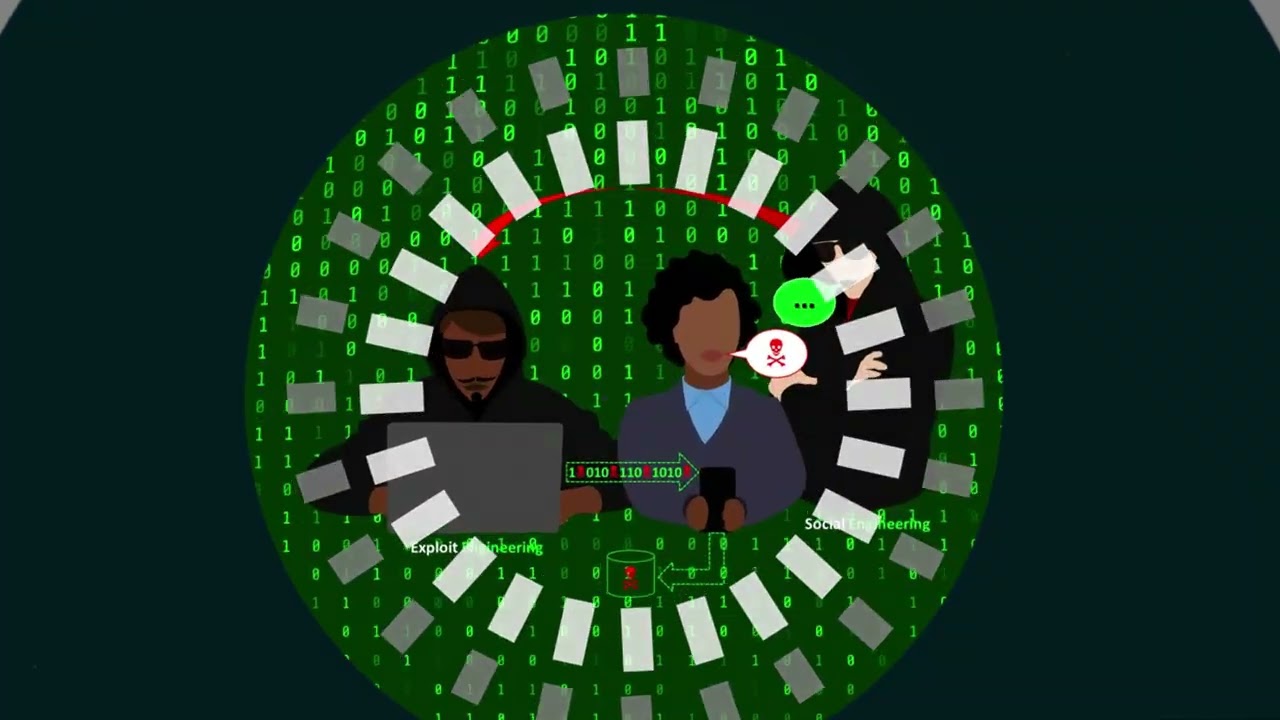
Conventional User and Entity Behaviour Analytics (UEBA) fail in high-assurance environments because they rely exclusively on post-hoc probabilistic parsing of flat textual log files – an attack surface easily blind-spotted or poisoned by kernel-level rootkits and compromised administrator credentials. In the onePOI architecture, UEBA 2.0 is structurally fused with Hardened Hardware Anchors. By binding eBPF kernel observational probes and the Control Flow Knowledge Graph (CFKG) directly to AMD SEV-SNP / Intel SGX Trusted Execution Environments and Hardware Bill of Materials (HBOM) digests, the sensory layer operates on mathematically unfalsifiable physical ground truth.
Silicon-Rooted HBOM
Observational filters activate only after cryptographic verification of the Hardware Bill of Materials (HBOM), sealing out physical rogue components and unmapped bus peripherals.
Live Graph Projection
Agentic fleet actions are overlaid in real time across the pre-compiled CFKG, instantly triggering a structural VETO if live trajectories cross non-permitted regulatory thresholds.
Zero Internal Drift
Enforces the Monotonic Delegation Axiom at the silicon layer; delegate agents and background services can never expand their operational scope beyond their parent principal.
Hardware-Anchored eBPF Kernel Hooks
To achieve non-bypassable security, the Inspector operates directly within host kernel space, utilising **eBPF and Tetragon** to deliver **“wire-speed regulatory compliance”** on standard Linux kernels, providing software-defined agility without custom ASIC dependencies.
Isolated inside a hardware-secured Trusted Execution Environment (TEE) backed by industry-standard **AMD SEV-SNP** and **Intel SGX** trust anchors, the monitoring code remains secure even if administrative access is compromised.
The **HBOM (Hardware Bill of Materials) check** serves as a prerequisite for eBPF-based enforcement. The kernel-level security filters only activate if the underlying hardware attestation matches the verified policy hash, ensuring a trusted hardware-to-software chain.
The system continuously calculates a **Substantiated Integrity Score (SIS)** as a real-time measure of “Constitutional Health” derived from **Tetragon-observed security events** and **SBOM/DBOM integrity mismatches**. In the event of an **Authority Collapse** (indicated by SIS degradation), the system triggers an immediate fail-closed shutdown, isolating the compromised host via **eBPF/Cilium network rules** to prevent threat propagation across the wider federation.

Binary Attestation & TEE Memory Checks
Binary Attestation & TEE Memory Checks
Inspects running application binaries against registered SBOM hash values. The Inspector runs checks on TEE CPU enclaves to verify memory integrity, protecting against buffer overflows and memory injection attacks.
By combining eBPF/Tetragon kernel hooks with hardware trust anchors, the system enforces **Control Flow Integrity (CFI)** at wire-speed. The eBPF filters only activate if the underlying hardware attestation (HBOM) matches the verified policy hash, preventing “Shadow AI” or un-audited processes from executing.
All secure telemetry processing, cryptographic key isolations, and event fragment buffering are performed inside AMD SEV-SNP/Intel SGX enclaves utilising hardware-level memory slicing to prevent physical DMA attacks. When an ephemeral OBO Token expires or PII is deleted, the system executes **Atomic Shredding** – physically zeroising the corresponding memory sectors inside the enclave. A hardware-generated **Wipe Attestation Signature (WAS)** is then issued as cryptographic proof of physical destruction.
Pre-Execution Guardrails and the Triadic Adjudication Gauntlet
Before any state modification can be executed, the proposed payload must survive the **Triadic Adjudication Gauntlet**. In this workflow, the deterministic **DRAGON Engine** (utilising eBPF-based security) acts as the “ultimate safety valve” or “deterministic judiciary” – ensuring the kernel only permits state changes based on non-negotiable law.
The adjudication pipeline is split into three sequential passes:
1. Syntactic Adjudication
Executed at wire-speed on **SmartNIC DPUs** as a preflight pass optimisation. This drops malformed schemas, structural anomalies, and potential prompt injection payloads at the physical network interface – blocking “Denial of Wallet” (DoW) resource exhaustion attacks before they can reach deeper computational layers.
2. Semantic Adjudication
Reframed as **Accelerated Semantic Alignment** – a high-speed query mapping probabilistic intent to canonical enterprise definitions (such as BIAN or FIBO ontologies) within the **KnowledgeHUB**, validating logical path consistency against the CFKG.
3. Pragmatic Adjudication
Evaluates context-dependent variables (such as time, location, role, and the token’s Purpose Limitation boundaries). These constraints are evaluated as formal **First-Order Logic predicates** combined with domain-specific theories (e.g., bit-vectors and arrays) within TEE enclaves.
If the adjudication passes identify conflicting rules – such as overlapping prohibitions where acting and not acting are both illegal – the system detects a logical deadlock known as a **Gödelian Shadow**. Upon identification, the engine triggers a VETO_OntologicalFailure, enforcing a global **DENY-ALL** security state. Under the **Survivability Doctrine**, the DRAGON Engine immediately freezes the conflicting logical nodes and escalates the paradox to the human **TopHAT Council** for judicial resolution, isolating the stasis so it cannot freeze unrelated edge terminal operations.
This validation process is anchored in key global regulations – explicitly satisfying the requirements of **DORA Article 6** (Operational Resilience), **GDPR Article 32** (Security of Processing), and **PSD3 Article 73** (Refusal Communication).
 Analysing the Adjudication Funnel
The triadic funnel diagram below (“inspector_s5.png”) details the sequential validation passes that every transactional payload must traverse. It shows the preflight syntactic offloading on SmartNIC DPUs, the semantic alignment of model weights to enterprise schemas, and the pragmatic execution checks within secure enclaves. The diagram maps how logical vetoes, Gödelian Shadow deadlocks, and lawful warrants are generated and routed, guaranteeing that no state modifications are applied to the database unless all three filters are successfully bypassed.


Algebraic Integrity Proofs & Software Validation Math
Algebraic Integrity Proofs & Software Validation Math
Executes algebraic integrity verification proofs on application code structures. The Inspector verifies that the running memory footprint matches the compiled FGL model structures, proving zero code drift.
The registration of axioms consists of **signed policy hashes stored in a local HSM-backed registry**, acting as universal trust coordinates. If altered, they instantly invalidate the node's authority.
Feedback Loop, Matrix & Transaction Timeline
The final stage of the runtime lifecycle feeds telemetry from eBPF syscall monitors back to the **inSight360 Weaver**, completing the **System Governance Flywheel**. These compliance metrics are routed to the **Executive Oversight Dashboard**, giving compliance officers a tangible moment to review and ratify policy refinements suggested by the AI's causal analysis, ensuring human legislature remains the ultimate authority.
Architectural Lifecycle of an Autonomous Transaction
Follow the step-by-step traversal of proposed agent intents as they are validated and recorded.
Intent Generation (Probabilistic SoI)
An autonomous software agent operating within the Inference Engine proposes an operational payload (Proposed Intent) based on operational context.
Constitutional Interception
The non-bypassable service mesh intercepts the execution payload, routing it to the **DRAGON Adjudication Engine** (the deterministic judiciary).
Triadic Adjudication passes
The payload traverses the syntactic (eBPF), semantic (Accelerated Semantic Alignment), and pragmatic (TEE simulations) passes. A pass issues a signed **Lawful Warrant**, while a failure issues a **VETO**.
Silicon Witness & eBPF Enforcement
With the Lawful Warrant presented, the kernel-level eBPF filters (attested by HBOM/SBOM) authorise execution flows.
Executive Ratification Loop
Execution telemetry is routed to the Executive Oversight Dashboard, completing the loop and allowing human compliance managers to refine policy axioms.
Structural Interoperability Matrix
The following matrix outlines how the platform's core security components interoperate across the physical, logical, and regulatory tiers:
| Component | Execution Tier | Core Primitive | Primary Functional Role |
|---|---|---|---|
| Inspector Sensor | Linux Kernel via eBPF/XDP hooks inside secure TEE | Syscall streams & Event Fragments | Acts as the non-bypassable “Silicon Witness,” capturing low-level ground truth and enforcing CFI. |
| inSight360 | Hardware-Accelerated Compute Nodes | Causal models & Event Frames | Weaves physical hardware telemetry with semantic business context and legal ontologies. |
| Control Flow Knowledge Graph (CFKG) | Distributed Graph Databases (Neo4j Aura) | Directed Acyclic Graph (DAG) | Serves as the authoritative blueprint mapping legal reachability paths and compliance limits. |
| DRAGON Engine | Heterogeneous Compute Core (eBPF + TEE) | Symbolic First-Order Logic | Executes pre-execution adjudication checks to intercept non-compliant intent at wire-speed. |
| Zenjin | Isolated Cryptographic Co-processor | Counterfactual Logic Structures | Guardian AI executing out-of-band alignment and Zero-Party Data boundary validation. |
| Registrar | HSM / Local Registry | Signed Policy & SBOM Hashes | Version-control oracle tracking the lifecycle, immutability, and validity of platform axioms. |
Syntactic Scrubber & Control Flow Knowledge Graphs (CFKG)
Operating as an analytical security persona, the Inspector runs wire-speed syntactic edge sweeps to scrub infrastructure payloads against active DBOM and SBOM schemas. Input validation vulnerabilities and payload mutations are intercepted before kernel execution.
[ Human / Agentic Intent ] ──► [ Syntactic Scrubber ] ──► [ CFKG Construction ] ──► [ SMT Pre-Pruning ] ──► [ LSRG Matrix to DRAGON ]Cleared payloads are constructed into a Control Flow Knowledge Graph (CFKG), merging live entity relationships with Agreement DAGs under Deontic Logic ($\mathbf{F} \succ \mathbf{O} \succ \mathbf{P}$). SMT solver loops pre-prune non-compliant paths into a sparse 2D Legal-State Reachability Graph (LSRG) loaded onto DRAGON hardware for $O(1)$ constant-time execution.