Agentic AI That Cannot Cost You a Fine
Parametric Cognition Governance (PCG): From Metaphor to Measurable Parameter
AI safety here is not a policy document, a filter, or a promise of good behaviour. It is a set of fixed, non-negotiable parameters built into the execution path itself, enforced in hardware by the real-time transaction gatekeeper. Read how the onePOI.online Constitutional OS replaces human-sounding alignment language with parameters that can be measured, proven and audited.
Read Warwick Metcalfe's Full PCG Whitepaper →What is the System of Intelligence?
The System of Intelligence (SoI) is the "Mind" of the Symphony – the platform's probabilistic advisor. It is an outer wrapper that encompasses all five structural layers, and it is the awareness of the entire Constitutional Operating System.
Using the Zenjin reasoning engine and a neuro-symbolic knowledge fabric for deliberate, System-2 reasoning, the SoI analyses real-time data streams to eliminate drift in agentic execution. It generates a Proposed Intent, and monitors Trust Decay – probabilistic scores that flag evolving risk and anomalous behaviour across every layer of the platform.
The SoI operates through the iEngine – the operational heart of intelligence, functioning within the Axiom Mesh. It is not a generic AI but a Guardian Agent that maintains the platform's immune system.
The Structural Boundary: because any AI can drift or hallucinate, the SoI is built so that it cannot make a legal decision at all. Its suggestions are always subordinate to the deterministic rulebook held in the System of Agreement. If the SoI proposes a path that breaches a prohibition, the proposal is discarded before execution – not debated, not overridden, not escalated for approval.
Constitutional Role
The Mind – probabilistic advisor and real-time guardian. Operates the Inference Engine (iEngine) across the Agentic Symphony, adjudicating policy intent against operational behaviour.
Authority Profile
Authority-poor – the most important architectural invariant. The SoI can sense and suggest. It cannot authorise. This prevents AI hallucination from ever mutating authoritative system state.
Continuous Monitoring
Round-the-clock observability over Identity and Access Management (IAM), Customer IAM (CIAM), privacy, integrity and availability – across all five structural layers simultaneously.
What This Is Worth to a Tenant
Zero-CAPEX edge
The SoI runs as a white-labelled tenant on shared Point of Interaction appliances. A bank, a merchant group or a civic authority gets its own isolated, governed intelligence layer without buying, siting or certifying single-tenant hardware.
Margin recovery
Because the SoI's proposals are settled on direct bank-to-bank rails rather than card rails, the percentage interchange toll on each transaction is replaced by a flat clearing fee. On a mid-sized merchant book that difference is the single largest line item the architecture moves.
Zero-liability safety
Under PSD3 and the UK Payment Systems Regulator's reimbursement rules, a firm that cannot prove it acted correctly pays. The SoI produces the proof automatically, as a by-product of every decision: what was proposed, what rule was applied, what the answer was, and when. Unlawful execution is prevented rather than detected, so the fine, the reimbursement and the remediation programme do not arise.
Compliance as a product
Institutions that hold this capability can white-label it. Proof-of-compliance and governance services can be sold on to smaller banks, payment firms and merchants that cannot build the infrastructure themselves – turning a compliance cost centre into a revenue line.
Cross-sector revenue
One governed intelligence layer serves financial, civic and retail services at the same physical point of interaction, so a single deployment can be monetised across more than one sector.
What This Is Worth to the Person Using It
Sovereign privacy
There is no data honeypot to breach. The wallet projects a verified fact – cleared for this payment, old enough, authorised to act – without handing over the underlying personal data. The SoI is specifically built so that its working picture of a person can never be reassembled back into their raw personal information.
Universal convenience
The same interaction pattern works at a kiosk, a vehicle charger, a counter or a checkout. One way of proving who you are. One way of approving a payment. Nothing new to learn per venue.
Total trust
Approval is cryptographic, not conversational. A scam call cannot talk someone into an approval that was never cryptographically given, and an AI agent cannot spend beyond the limits its owner set, because the authority simply is not there to be abused.
Failure without drama
When a request is refused, the person is not left staring at an error. The Guardian Agent absorbs the refusal, works out why, and offers a lawful alternative route.
Zenjin Engine & Trust Decay
Zenjin is the resident Guardian Agent of the System of Intelligence. It combines step-by-step causal reasoning with narrative synthesis, linear-complexity temporal memory, and locally adaptive edge models to maintain a live picture of how much confidence the platform should place in any party, agent or transaction. Zenjin holds no execution rights of its own: it senses, scores and proposes, and it is structurally unable to authorise anything.
Relationship and Risk Modelling
The SoI models the evolving relationships between entities – people, organisations, devices, transactions – across two independent time axes: when something was true in the real world, and when the system recorded it. That separation lets the platform detect structural change that signals emerging risk before it becomes an incident, and lets an auditor replay any past decision exactly as the law stood at that moment.
Trust Decay Scoring
Trust Decay is a probabilistic score that measures the confidence degradation of an entity over time. High decay triggers escalation to TopHAT human oversight – flagging evolving risk before it crystallises into a constitutional violation.
Proposed Intent
Zenjin's output is never an action. It is always a Proposed Intent – a recommendation that must pass adjudication before any system state can be modified.
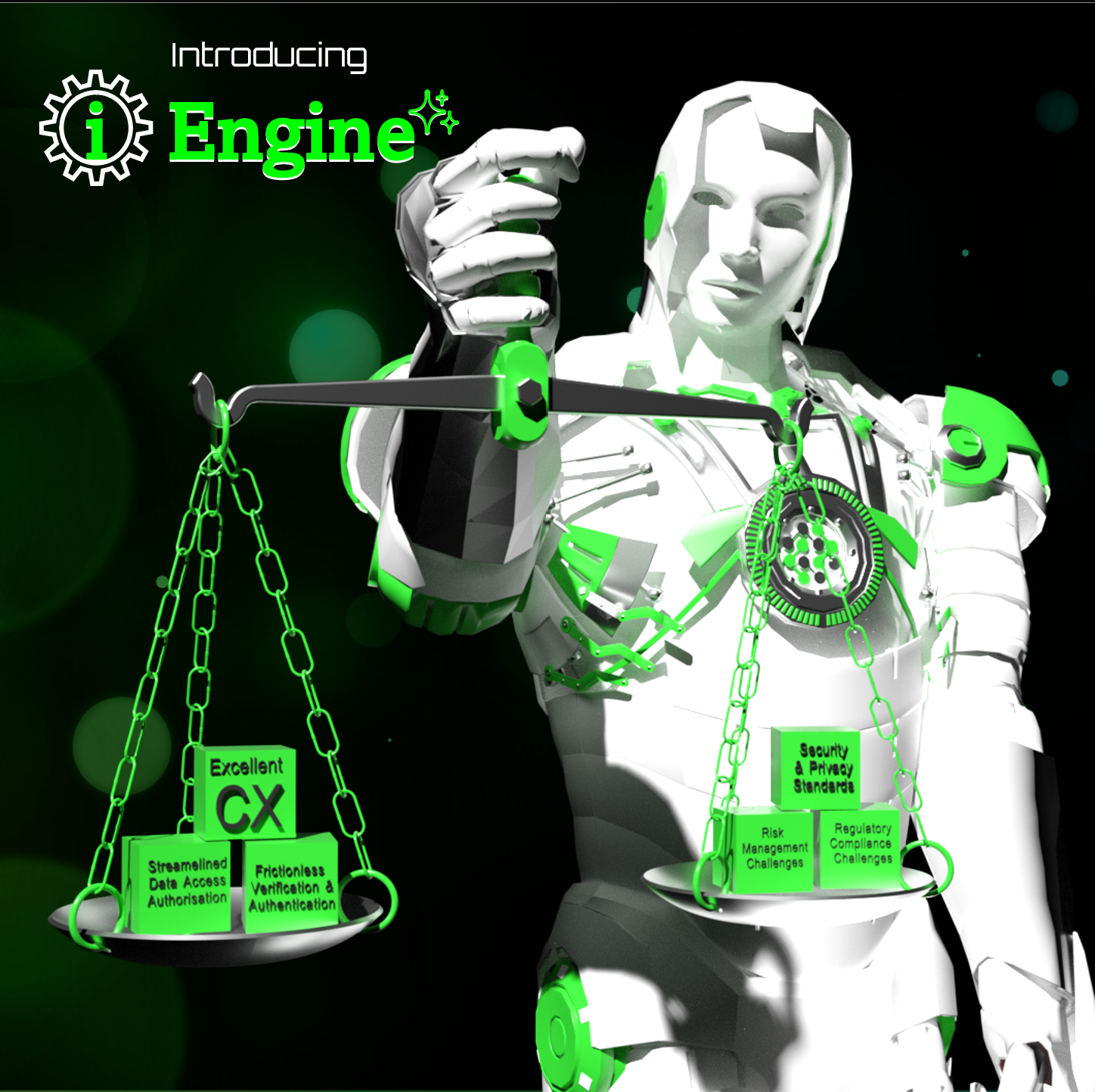
Figure 5.1: iEngine Operational Balance Scale – balancing user experience and access efficiency against security, privacy and regulatory controls.
The Dual-Mandate Scale: iEngine Operational Balancing
The iEngine operates as the core balancer within the System of Intelligence, maintaining a precise equilibrium across the platform. On one side of the scale it prioritises customer experience, streamlined data access authorisation, and frictionless verification and authentication, so that user interactions remain fast and intuitive. On the opposing side it continuously weighs those conveniences against security and privacy standards, risk management constraints, and regulatory compliance obligations. Using real-time neuro-symbolic logic, it adjusts permissions to satisfy security requirements without degrading the experience.
 The iEngine & Guardian Agent
The iEngine is the operational heart of the SoI, functioning within the Axiom Mesh. It monitors the mesh continuously, detecting when any node, agent or transaction deviates from agreed constitutional parameters.
The Guardian Agent is the iEngine's protective persona. It is an active watcher, not an enforcer: it holds no execution authority and cannot alter system state. It operates the Governance Flywheel – continuously cycling through Detection, Validation and Assessment – drawing on the platform event mesh and real-time execution telemetry to compute Trust Decay scores and flag drift away from agreed parameters. Where it sees a problem it raises it. Enforcement is carried out elsewhere, by components that hold the authority to act.
- Detection: monitors the Axiom Mesh for anomalies through intelligent automation, telemetry analytics and multi-agent posturing.
- Validation and Response: opens the response loop – the iEngine and the TopHAT human oversight function validate the threat and recommend the recovery path. Recovery itself is executed under a lawful warrant, not on the iEngine's own authority.
- Assessment and Disclosure: confirmed impacts are escalated to the legal adjudication loop for regulatory disclosure.
Collaborative Intelligence – Human & AI

Figure 5.2: Collaborative Intelligence – co-operative workflows combining probabilistic AI agent reasoning with human authority and oversight.
Collaborative Intelligence: Human and AI Agent Co-operation
Rather than replacing human oversight, the System of Intelligence establishes a collaborative ecosystem between human and AI agents. Probabilistic AI agents running on the Zenjin engine operate as rapid, high-context advisors – sensing trends, detecting anomaly patterns and generating recommendations. Those suggestions remain subordinate to the human in the loop and to the deterministic validation layer. Humans govern the parameters and handle high-order escalations; AI agents automate the validation and analysis work. The result combines the speed and scale of machine intelligence with the ethical reasoning and accountability of human authority.
The Constitutional Handoff – SoI to Adjudication
The handoff from the SoI to adjudication is the most critical boundary in the entire Symphony. It is where probabilistic intelligence meets deterministic law.
1. Zenjin senses an anomaly or an opportunity and generates a Proposed Intent – even where that learning came from a contaminated data stream.
2. The adjudication engine receives the Proposed Intent and checks it against the System of Record for completeness of obligation, verifying the intent against the policy version currently in force.
3. Outcome: if compliant, a Lawful Warrant is issued. The Gatekeeper validates the signature, schedules execution and releases the locks; the Conductor sequences the work; execution telemetry is streamed back; and the Notary commits the lawful act to the record. If non-compliant, a structural veto is emitted, the AI's intent is discarded, and the state change is physically prevented from occurring.
SoI Capability Sets
The named capability products hosted within the System of Intelligence layer of the onePOI.online architecture.
iEngine
The operational heart, running high-assurance neuro-symbolic inference and Trust Decay scoring.

inSight360
Multi-modal observability, causal diagnostics, and court-admissible Minimum Viable Evidence Bundles (MVEBs).

Guardian
Active security and policy monitor, driving the Governance Flywheel to protect the Axiom Mesh.
Regulatory Alignment
DORA
Continuous, timestamped mathematical proof of operational execution and supply-chain integrity, rather than a periodic attestation.
EU AI Act
Immutable model lineage, continuous drift monitoring, and hard boundaries on how far a non-human agent may act.
GDPR
Verification without disclosure. Assertions are proven cryptographically; the underlying personal data is never handed over.
PSD3 & UK Reimbursement Rules
Automatic, replayable evidence that strong customer authentication and screening obligations were met at the moment of the transaction.
Scope: United Kingdom, European Union and MENAT corridors.
Autonomous Financial Cognition Under Deontic Restraint
Every commercial transaction and autonomous agent interaction ultimately resolves into a lawful value exchange, identity binding, or fiduciary obligation. The Salient FinTech Innovation Set provides the non-negotiable trust engine for the System of Intelligence. It embeds strict BIAN domain models and statutory banking limits directly into the inference loop, ensuring that neural models can detect anomalies and propose optimal payment routing without ever possessing the discretion to violate AML rules, capital constraints, or consumer protection safeguards.
Real-Time Fraud & Anomaly Sensing
The Zenjin engine continuously computes Trust Decay metrics over streaming transaction hypergraphs, detecting synthetic identity fraud, authorised push payment (APP) scams, and anomalous behavioural spikes in real-time.
Pre-Flight Solvency & Limit Inference
iEngine predicts cross-border clearing trajectories and optimises FX and liquidity allocation, emitting Proposed Intent that adheres strictly to pre-validated SEPA Instant and A2A clearing schedules.
Explainable Evidence Bundles (MVEBs)
Every proposed financial action generates a cryptographically signed Minimum Viable Evidence Bundle proving which data inputs, model versions, and causal chains produced the recommendation for supervisory transparency.
Commission a 5-Day Architectural Discovery Sprint
Accelerate your path to sovereign digital commerce. In five intensive working days, our principal systems architects map your enterprise operational perimeters directly against the Six-Fold Symphony of Systems architecture.
Complete audit of current touchpoints against SoE, SoA, SoO, SoR, SoI, and TRS-MS boundaries.
Translating legacy silo APIs into canonical semantic service domains and Agreement DAG schemas.
Token Gantry and TEE isolation sizing for zero-leakage payment and identity workflows.
Boardroom-ready blueprint with targeted milestones for the Q4 2026 / 2027 production target state.
*Fixed-price introductory engagement for qualified enterprise tenant cohorts. Deployed exclusively to your designated sovereign boundary.